


The Ultimate Roundup of Habit Leadership Coaching Programs
- Apr 9
- 6 min read
Is a Habit Formation Coach the Missing Piece in Your Growth

A habit formation coach is a trained professional who helps you build new behaviors, break unproductive ones, and create systems that run on autopilot — so you stop relying on willpower alone.
Here are the top habit leadership coaching formats covered in this roundup:
Science-Backed Certifications — programs focused on micro-habit methodologies
Behavioral Science Mentorships — cohort-based programs for deep behavioral change
Practitioner Training — accredited modules for professional habit change mastery
One-on-One Habit Coaching — personalized programs ranging from ~$600 to $1,650+
Group & Online Habit Coaching — lower-cost formats with community accountability
You already know what you should be doing. The problem isn't knowledge — it's execution.
Behavioral science tells us that the majority of our daily decisions happen on autopilot. That's not a flaw. It's actually an opportunity. When your habits are well-designed, good decisions happen automatically, without mental effort or discipline.
But most people try to change habits the hard way — going big, relying on motivation, and quitting when it fades. A skilled habit coach flips that script entirely.
As Aristotle put it: "We are what we repeatedly do. Excellence, then, is not an act, but a habit."
For founders and leaders especially, the stakes are high. Poor habit systems don't just stall personal progress — they ripple into team performance, decision quality, and long-term results.
This guide breaks down the best habit coaching programs available, what they cost, who they're for, and how to choose the right one.
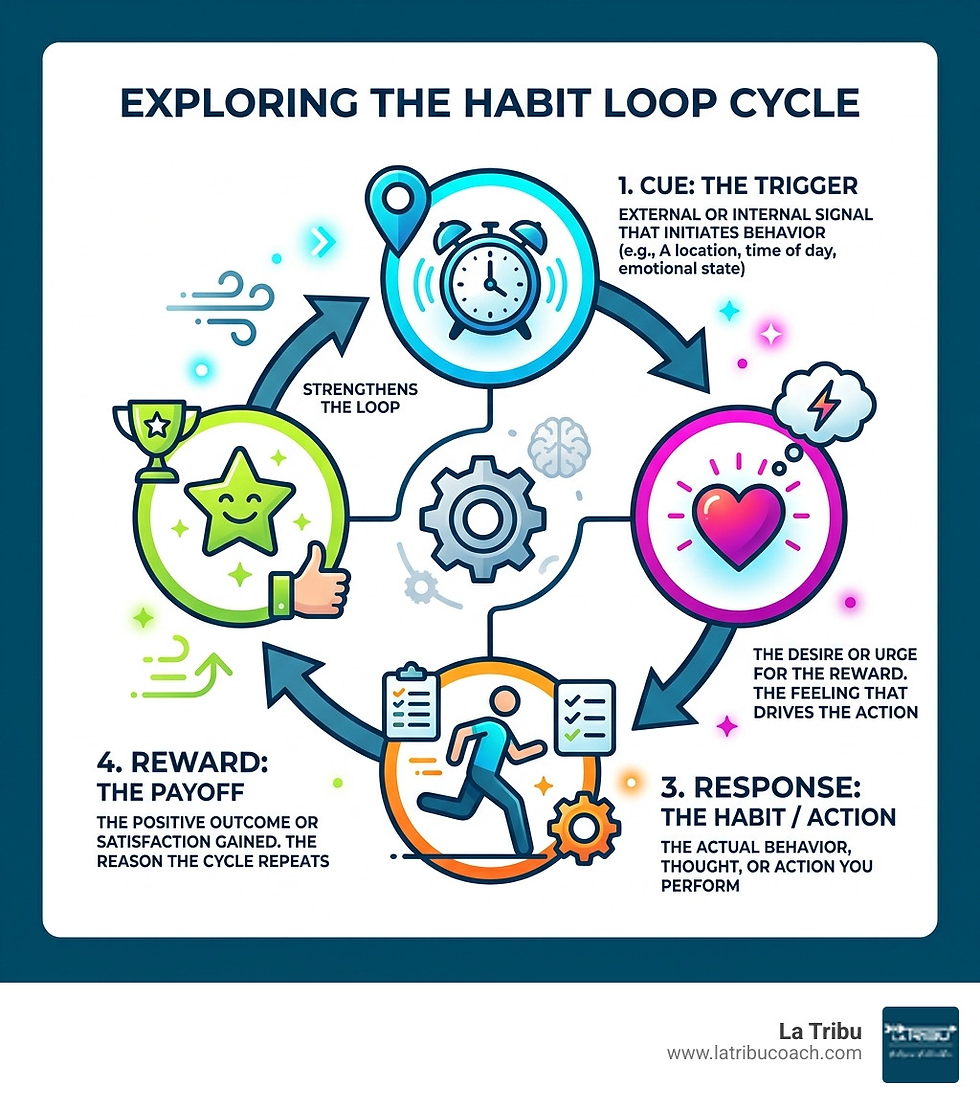
The Science Behind Hiring a Habit Formation Coach
Why is it so hard to make a change stick? The answer lies in your brain's architecture. Behavioral science reveals that a staggering majority of our daily decisions are made on autopilot. Our brains are essentially "lazy" by design; they seek the path of least resistance to conserve energy. This is where a habit formation coach becomes invaluable.
Instead of fighting your biology, a coach helps you work with it. By understanding behavioral economics and psychology, they help you design environments where the "right" choice becomes the "easy" choice. This shift from white-knuckled willpower to automated systems is the core of personal transformation. If you've ever wondered What is an Accountability Coach, think of them as the partner who ensures those automated systems actually get built and maintained.
What to Expect from a Habit Formation Coach
When you engage with professional Coaching Programs, the process is far more structured than just "getting motivated." It typically begins with a deep-dive initial assessment to identify your "Inner Antagonist"—that voice that keeps you stuck in old loops.
A coach provides:
Progress Tracking: Using digital dashboards, journals, or apps to move from vague feelings to hard data.
Strategic Accountability: Regular check-ins that provide the external pressure needed until the habit becomes internal.
Troubleshooting: Analyzing why a habit failed (e.g., a missing cue or an unrealistic target) and adjusting the plan immediately.
How a Habit Formation Coach Uses Neuroscience
The best coaches don't just give advice; they apply neuroscience. One key concept is synaptic pruning. This is the brain's way of strengthening frequently used neural connections while eliminating unused ones. By repeating a new behavior, you are literally re-wiring your physical brain.
Coaches often draw from established behavioral science research. These methodologies focus on automaticity—the point where a behavior requires zero conscious thought. This is especially critical for Brain Health Coaching: Fall Forward with Habits for Energy and Focus, where the goal is to reduce cognitive load so you can focus on high-level leadership tasks.
Proven Techniques in Habit Leadership Programs
The difference between a wish and a result is a system. Professional habit coaching programs use specific, science-backed techniques to ensure new behaviors "stick" to your existing life.
Habit Stacking: This involves anchoring a new habit to a reliable, existing one. For example: "After I pour my first cup of coffee (existing cue), I will write down my top three priorities for the day (new habit)."
Micro Habits: These are versions of your goal that are so small they are impossible to fail. Instead of "do 50 pushups," a coach might start you with "do two pushups against the kitchen counter."
Implementation Intentions: This is a "pre-decision" strategy. You decide exactly when and where a behavior will happen: "If it is 12:00 PM on Tuesday, then I will go for a 10-minute walk."
Core Principles of Effective Coaching
Beyond the tactics, the relationship between a coach and a client is built on several core pillars:
Empathy and Active Listening: Change is hard and often accompanied by shame. A coach provides a safe space to discuss setbacks without judgment.
Positive Reinforcement: Celebrating small wins is not just "feel-good" fluff; it’s a neurological necessity to trigger the reward center of the brain.
Clear Vision Setting: You cannot build a habit if you don't know why it matters. Coaches help you connect daily actions to your long-term identity.
Understanding these principles can also help you identify The Real Reason You’re Burnt Out—often, it’s not the workload, but the lack of supportive habits and systems to manage it.
Real-World Applications Across Industries
Habit coaching isn't just for the gym. It is a versatile tool used in:
Business Leadership: Establishing habits for deep work, effective delegation, and executive presence. Business Coaching often integrates habit formation to ensure leadership growth is sustainable.
Productivity: Systems for "inbox zero," time blocking, and ending procrastination.
Health and Nutrition: Moving away from "dieting" toward sustainable morning routines, sleep hygiene, and mindful eating.
Breaking the Cycle: Overcoming Bad Habits and Setbacks
Most people view a setback as a sign that they should quit. A habit formation coach views a setback as data. They help you break the "all-or-nothing" thinking that leads to the "what the hell" effect (where one mistake leads to a total collapse of the plan).
Breaking a bad habit isn't about willpower; it's about strategy. We often suggest making the "bad" habit harder to do (increasing friction) while making the "good" habit easier (decreasing friction). If you find yourself frustrated by the cycle of starting and stopping, you might resonate with Why You Keep Starting Over.
Common Mistakes in Habit Formation
Professional coaches help you avoid the pitfalls that sink 90% of solo attempts:
Deprivation Pitfalls: Trying to "stop" a behavior without replacing it with something else.
Vague Goals: "I want to be more productive" is not a habit. "I will clear my desk for 2 minutes at 5:00 PM" is.
Lack of Cues: If there is no specific trigger for a behavior, the brain will never move it to the "autopilot" track.
There is often a gap between what we think works and what actually does. For more on this, check out What Nobody Tells You about the reality of long-term change.
Strategies for Long-Term Retention
To ensure a habit lasts a lifetime, coaches focus on environment design. If you want to eat more fruit, put it in a bowl on the counter, not hidden in the crisper drawer.
Furthermore, a good coaching program includes tapering support. The goal of a coach is eventually to become unnecessary. By slowly reducing the frequency of sessions while maintaining digital accountability, the client builds the self-reliance needed to maintain their own systems.
Frequently Asked Questions about Habit Coaching
How much does a habit formation coach cost and what formats are available?
The cost of habit coaching varies based on the level of support and the expertise of the coach. In the Pacific Northwest and specifically the Seattle area, prices generally align with professional consulting rates.
Format | Typical Cost Range | Best For... |
One-on-One Coaching | $500 - $1,500+ (per program) | High-level leaders needing custom systems and high accountability. |
Group Coaching | $200 - $500 (per month) | Those who enjoy community support and learning from others' challenges. |
Online Certifications | $1,000 - $2,000 (total) | Professionals looking to add habit coaching to their existing skill set. |
Conclusion
At La Tribu, we believe that clarity is useless without execution. Our mindset and accountability coaching is designed specifically for individuals, leaders, and teams in the Pacific Northwest and beyond who are tired of "fluff" and ready for action.
Whether you are in Seattle or working with us virtually from across the globe, our goal is to help you turn your highest ideals into daily, autopilot behaviors. We don't just tell you what to do; we provide the simple plans and the relentless accountability needed to make it happen.


Comments